Bleeding gums may seem like a minor nuisance, especially if it happens while brushing or flossing. However, this common issue can often be a sign of underlying oral health problems. Understanding the causes of bleeding gums is the first step toward protecting your smile and preventing more serious dental conditions, such as gingivitis or periodontitis.
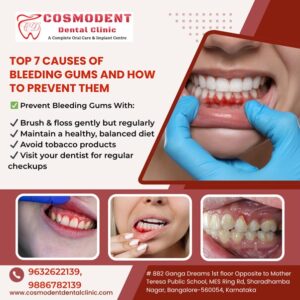
In this blog, we’ll explore the top 7 causes of bleeding gums and provide practical tips to prevent and treat them effectively.
What Are the Main Causes of Bleeding Gums?
Bleeding gums can occur for several reasons — some are harmless and easy to fix, while others require dental treatment. Understanding the causes of bleeding gums is the first step toward preventing them.
- Poor Oral Hygiene
One of the most common causes of bleeding gums is poor oral hygiene. When plaque—a sticky film of bacteria—is not removed from your teeth through regular brushing and flossing, it hardens into tartar. This buildup irritates the gum line and leads to inflammation and bleeding, especially during brushing.
✅ Prevention Tips:
- Brush twice a day using a soft-bristled toothbrush.
- Floss daily to remove debris between teeth.
- Rinse with an antibacterial mouthwash to reduce bacteria.
- Visit your dentist every 6 months for a professional cleaning.
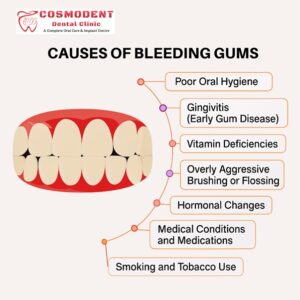
- Gingivitis (Early Gum Disease)
Gingivitis is the earliest stage of gum disease and one of the leading causes of bleeding gums. It occurs when plaque buildup inflames the gums, making them red, swollen, and prone to bleeding. Gingivitis is reversible, but only if caught and treated early.
✅ Prevention Tips:
- Maintain good oral hygiene habits.
- Recognize early symptoms like puffy or tender gums.
- Use fluoride toothpaste to strengthen teeth and gums.
- Get regular dental checkups for early diagnosis.
- Vitamin Deficiencies (Especially Vitamin C and K)
A lack of essential vitamins, especially vitamin C and vitamin K, can weaken your gums and cause bleeding. Vitamin C plays a vital role in tissue repair and immunity, while vitamin K helps your blood clot properly. Deficiencies can lead to gum sensitivity, bleeding, and delayed healing.
✅ Prevention Tips:
- Include vitamin-rich foods in your diet, such as oranges, broccoli, spinach, and carrots.
- Consider supplements if recommended by a healthcare provider.
- Stay hydrated to support overall gum health.
- Overly Aggressive Brushing or Flossing
Brushing too hard or using the wrong technique can actually damage your gums. Over-aggressive brushing can wear down the gum tissue, causing it to recede and bleed. Similarly, flossing incorrectly or too forcefully can injure your gums.
✅ Prevention Tips:
- Use a soft-bristled toothbrush and brush gently in circular motions.
- Floss carefully along the gum line without snapping the floss.
- Ask your dentist or hygienist to demonstrate the correct techniques.
- Hormonal Changes (Pregnancy, Puberty, Menopause)
Hormonal changes during pregnancy, puberty, menstruation, or menopause can increase blood flow to the gums and make them more sensitive to plaque and bacteria. This hormonal imbalance often leads to pregnancy gingivitis, a condition that causes swollen, tender, and bleeding gums.
✅ Prevention Tips:
- Inform your dentist if you’re pregnant or undergoing hormonal changes.
- Maintain extra diligence with oral care during these times.
- Schedule more frequent professional dental cleaning if recommended.
- Medical Conditions and Medications
Certain medical conditions such as diabetes, leukemia, or blood disorders can increase the risk of gum bleeding. Likewise, medications like blood thinners, aspirin, or anticonvulsants can interfere with blood clotting and make gums more prone to bleeding.
✅ Prevention Tips:
- Discuss your medical history with your dentist.
- Follow up regularly with both your physician and dental care provider.
- Never stop taking prescribed medication without consulting your doctor.
- Smoking and Tobacco Use
Smoking or using other forms of tobacco weakens your immune system and makes it harder for your gums to heal. It also increases plaque buildup and restricts blood flow to gum tissues, leading to inflammation, recession, and bleeding.
✅ Prevention Tips:
- Quit smoking and avoid all tobacco products.
- Seek help from your dentist or a smoking cessation program.
- Improve oral hygiene to reverse early gum damage.
When Should You See a Dentist?
While occasional gum bleeding may not always signal a serious issue, persistent or severe bleeding should not be ignored. See a dentist if you experience:
- Gums that bleed daily or during eating
- Swelling, redness, or tenderness
- Receding gums or tooth mobility
- Bad breath that doesn’t go away
- Bleeding without brushing or flossing
Early diagnosis and treatment can prevent serious gum disease and help preserve your natural teeth.
How to Prevent Bleeding Gums: A Quick Checklist
Here’s a quick guide to keep your gums healthy and bleeding-free:
- Brush gently with fluoride toothpaste
- Floss daily using proper technique
- Use an antiseptic mouthwash
- Eat a balanced diet rich in vitamins
- Avoid smoking and tobacco
- Visit your dentist twice a year
- Stay hydrated to flush out bacteria
- Treat underlying medical issues promptly
Natural Remedies for Mild Gum Bleeding
If your bleeding gums are mild and due to early irritation, try these natural remedies along with your dental care routine:
- Saltwater rinse: Reduces inflammation and bacteria
- Aloe vera gel: Soothes irritated gums
- Turmeric paste: Acts as a natural anti-inflammatory
- Green tea: Contains antioxidants that boost gum health
Note: These remedies are not substitutes for professional dental care if symptoms persist.
Final Thoughts: Your Gums Deserve Attention
Understanding the causes of bleeding gums is essential to maintaining a healthy, confident smile. Whether it’s due to poor oral hygiene, vitamin deficiencies, or an underlying medical condition, bleeding gums should never be ignored. Fortunately, most causes are treatable with proper dental care, lifestyle adjustments, and early intervention.
If you’re experiencing bleeding gums regularly, schedule a dental checkup with Cosmodent dental clinic immediately. With the right diagnosis and care, you can restore your gum health and prevent future issues.