A beautiful smile is more than just aesthetics—it reflects confidence, personality, and overall health. If you’ve ever wished for a brighter, more balanced smile, natural looking porcelain veneers may be the perfect solution.
Porcelain veneers are one of the most popular cosmetic dentistry procedures today, offering a transformative yet subtle change to your teeth. In this comprehensive guide, we’ll cover everything you need to know about porcelain veneers—from how they work and who they’re best suited for to how they’re made to look so natural.
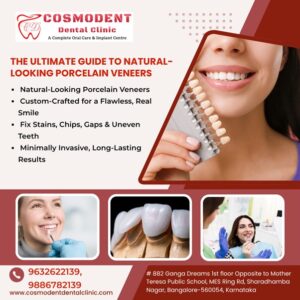
What Are Porcelain Veneers?
Porcelain veneers are ultra-thin, custom-made shells of medical-grade ceramic that are bonded to the front surface of your teeth. Designed to mimic the natural appearance of enamel, veneers are used to improve the shape, size, color, and alignment of your teeth.
Unlike dental crowns that cover the entire tooth, veneers only cover the front-facing portion, making them less invasive and more focused on aesthetics.
Why Choose Natural Looking Porcelain Veneers?
Many people hesitate to get veneers because they fear they’ll look fake or artificial. However, advances in dental technology have made it possible to create natural-looking porcelain veneers that blend seamlessly with the rest of your teeth.
Here’s why they’re preferred:
- Translucency: High-quality porcelain mimics the light-reflecting properties of real enamel.
- Customization: Shade, shape, size, and texture are tailored to match surrounding teeth.
- Durability: Porcelain is resistant to staining and can last 10–15 years or more with proper care.
- Non-invasive beauty: Unlike some cosmetic treatments, veneers provide subtle, long-lasting results without major surgery.
Who’s a Good Candidate for Porcelain Veneers?
Porcelain veneers can address a wide range of aesthetic dental concerns. You might be a good candidate if you have:
- Discolored or stained teeth that don’t respond to whitening
- Chipped or cracked teeth
- Gaps between teeth
- Uneven, worn-down, or misshaped teeth
- Mildly crooked or misaligned teeth (as an alternative to braces)
However, veneers may not be suitable if you have:
- Severe tooth decay or gum disease
- Insufficient enamel for bonding
- Teeth-grinding (bruxism), unless treated
A thorough consultation with a cosmetic dentist will help determine if natural-looking porcelain veneers are right for you.
The Step-by-Step Veneer Process
Creating and applying porcelain veneers is a precise and artistic process. Here’s a breakdown of what you can expect:
- Initial Consultation
Your dentist will examine your teeth, discuss your goals, and explain the veneer process. X-rays and impressions may be taken to evaluate your oral health.
- Smile Design and Mock-Up
You’ll work with the dentist to choose the ideal shade, shape, and size for your veneers. A digital or wax model of your new smile may be created to help visualize results.
- Tooth Preparation
A small layer of enamel (usually 0.3–0.7 mm) is removed from the front of each tooth. This ensures a proper fit for the veneers and a natural-looking finish.
- Impressions and Temporary Veneers
Precise impressions are taken and sent to a dental lab, where your porcelain veneers are custom-made. Temporary veneers may be placed while you wait.
- Bonding the Veneers
Once ready, the veneers are checked for fit and color, then permanently bonded to your teeth using a strong dental adhesive. Your dentist may make final adjustments for comfort and alignment.
What Makes Porcelain Veneers Look Natural?
The key to natural looking porcelain veneers lies in customization and attention to detail. Here are the main elements that contribute to their realistic appearance:
- Translucency
Just like natural enamel, high-quality porcelain reflects and absorbs light, giving veneers depth and realism.
- Color Matching
Your veneers are color-matched to your surrounding teeth. Skilled dentists often layer different porcelain shades to replicate natural variations.
- Shape and Contouring
No two teeth are the same, and veneers should reflect that. Aesthetic dentists carefully shape each veneer to match your facial features, bite, and natural tooth anatomy.
- Surface Texture
The best veneers have subtle grooves and texture—just like real teeth. This avoids a too-smooth, artificial look.
- Gum Line Fit
Properly placed veneers follow the natural curve of the gum line, making the transition between veneer and tooth virtually invisible.
How to Care for Your Porcelain Veneers
To keep your natural-looking porcelain veneers in top condition, follow these care tips:
- Brush and floss daily using a non-abrasive toothpaste
- Avoid biting on hard objects (ice, pens, fingernails)
- Wear a nightguard if you grind your teeth
- Visit your dentist regularly for cleanings and check-ups
- Limit highly pigmented foods and drinks (coffee, red wine, curry) to prevent edge staining
With proper care, your veneers can last 10 to 15 years—or even longer.
Frequently Asked Questions
Are veneers permanent?
Porcelain veneers are not reversible, as a small amount of enamel is removed. However, they are long-lasting and can be replaced if needed.
Do veneers hurt?
The procedure is minimally invasive and usually painless. Local anesthesia is used during tooth preparation.
Can veneers stain?
Porcelain is stain-resistant, but it’s still important to avoid excessive exposure to dark-colored foods and beverages.
Can I get veneers on just one tooth?
Yes, veneers can be applied to a single tooth or multiple teeth, depending on your cosmetic goals.
Choosing the Right Dentist for Veneers
To ensure the most natural-looking results, choose a cosmetic dentist who:
- Has experience in aesthetic dentistry
- Offers digital smile design or mock-up previews
- Uses high-quality dental labs for veneer fabrication
- Takes time to understand your goals and facial symmetry
Your dentist’s skill and artistic eye make all the difference in achieving seamless, natural looking porcelain veneers.
Final Thoughts
Porcelain veneers are more than a cosmetic upgrade—they’re a confidence booster, a self-care choice, and a long-term investment in your smile. With today’s advanced materials and personalized techniques, natural looking porcelain veneers can transform your teeth while still appearing completely authentic.
Whether you’re dealing with stains, chips, gaps, or uneven teeth, veneers offer a beautiful and lasting solution that enhances your natural beauty—without compromising it.