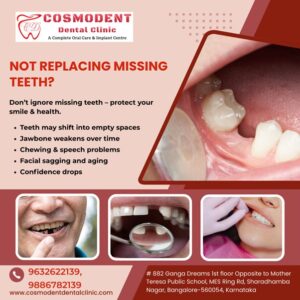
A healthy smile is more than just a confidence booster—it’s a vital part of your overall health. But what happens when you lose a tooth and decide not to replace it? Many people assume that missing a tooth, especially if it’s not visible when smiling, isn’t a big deal. However, the truth is far from that. Not replacing missing teeth can lead to serious oral health problems, functional issues, and even long-term effects on your overall well-being.
In this article, we’ll explore the consequences of ignoring tooth loss, why replacement is important, and the best solutions available to restore your smile.
Common Reasons Behind Tooth Loss
Before we dive into the consequences, let’s look at the common reasons behind tooth loss. People may lose teeth due to:
- Tooth decay and cavities left untreated.
- Gum disease (periodontitis) that weakens supporting structures.
- Injury or trauma to the mouth.
- Medical conditions like diabetes or osteoporosis.
- Poor oral hygiene habits leading to progressive dental problems.
While prevention is always best, life happens. The real concern arises when people ignore the problem and leave the gap unaddressed.
The Silent Consequences of Not Replacing Missing Teeth
Even if you’re not feeling pain, tooth loss sets off a chain reaction in your mouth. Here’s what happens over time when you avoid replacing missing teeth:
-
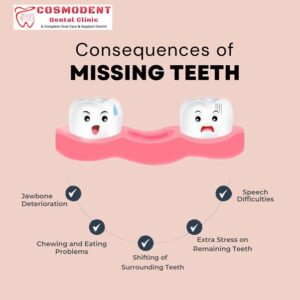
Shifting of Surrounding Teeth
Teeth rely on each other for alignment. When one tooth is missing, the neighboring teeth start to drift into the empty space. This leads to crooked teeth, bite problems, and even difficulty in cleaning your mouth properly. Over time, this increases the risk of tooth decay and gum disease.
-
Jawbone Deterioration
The roots of your teeth stimulate the jawbone every time you chew. Without that stimulation, the bone in the area begins to shrink and deteriorate. This process, called bone resorption, can change the shape of your face, leading to a sunken appearance and making you look older than you are.
-
Chewing and Eating Problems
Every tooth plays a role in the chewing process. When one or more are missing, your ability to chew certain foods—like nuts, fruits, or meats—diminishes. Over time, this can limit your diet, lead to poor nutrition, and affect your digestive health.
-
Speech Difficulties
Teeth are essential for proper pronunciation. Missing teeth, especially in the front, can cause speech problems, making it difficult to pronounce certain words clearly. This can lead to embarrassment in social or professional settings.
-
Extra Stress on Remaining Teeth
When you chew, the pressure distributes across all teeth. Missing one tooth means the others have to take on extra force, which may lead to fractures, wear, and even further tooth loss over time.
-
Changes in Facial Appearance
Without support from teeth and the underlying bone, your facial muscles may sag. This can cause premature wrinkles, a sunken look, and make you appear much older than your actual age.
-
Decreased Confidence and Self-Esteem
Your smile is one of the first things people notice. Missing teeth can make people feel self-conscious, avoid smiling, or even withdraw from social interactions. The psychological impact of not replacing missing teeth can be as significant as the physical consequences.
Long-Term Health Impacts
Beyond oral health, not replacing missing teeth can impact your overall health:
- Poor digestion due to inadequate chewing.
- Higher risk of infections in the mouth and gums.
- TMJ disorders from imbalanced bites.
- Nutritional deficiencies caused by avoiding certain foods.
Ignoring tooth loss doesn’t just affect your smile—it affects your entire body.
Options to Replace Missing Teeth
The good news is that dentistry offers multiple solutions for tooth replacement. Depending on your condition and budget, here are the best options:
-
Dental Implants
- Permanent and natural-looking solution.
- Prevent bone loss by stimulating the jawbone.
- Function like real teeth.
- Require surgery but have long-lasting results.
-
Dental Bridges
- Suitable when one or two teeth are missing.
- Supported by adjacent natural teeth.
- Restore chewing function and appearance.
- May require alteration of healthy neighboring teeth.
-
Dentures (Partial or Full)
- Removable and cost-effective.
- Improve chewing and speech.
- May need adjustments over time.
- Don’t prevent jawbone shrinkage like implants.
Each option comes with pros and cons, but the key is not leaving the gap untreated.
Preventing Tooth Loss in the First Place
While replacements are effective, prevention is always better. Here are simple ways to protect your teeth:
- Brush twice a day with fluoride toothpaste.
- Floss daily to remove plaque between teeth.
- Visit your dentist every 6 months for check-ups.
- Avoid sugary snacks and drinks.
- Wear a mouthguard if you play contact sports.
- Quit smoking, as it increases the risk of gum disease.
By maintaining good oral hygiene, you can significantly reduce the risk of losing teeth.
When Should You Replace a Missing Tooth?
The best time to replace a missing tooth is as soon as possible. The longer you wait, the more complications you invite—bone loss, shifting teeth, and bite changes. Acting early not only preserves your oral health but also reduces the cost and complexity of treatment later.
The Emotional Side of Tooth Loss
It’s not just about function and health. People who avoid replacing missing teeth often experience:
- Embarrassment in public due to visible gaps.
- Low confidence in professional settings.
- Hesitation in smiling or laughing freely.
Replacing teeth restores not only oral health but also the emotional well-being that comes with a confident smile.
Why You Shouldn’t Delay Treatment
Many people delay replacing teeth because of cost concerns, fear of dental procedures, or thinking it’s not urgent. However, the longer you wait, the worse the consequences become. Bone resorption, shifting teeth, and functional problems can make treatment more complicated and expensive in the future.
Investing in your smile today saves you from greater pain and expense tomorrow.
Final Thoughts
Your teeth are meant to last a lifetime, but sometimes life throws challenge your way. If you’ve lost a tooth, don’t assume it’s harmless to leave the gap as it is. Not replacing missing teeth can lead to bone loss, chewing problems, speech difficulties, premature aging, and a loss of confidence.
Thankfully, modern dentistry offers multiple replacement solutions—from implants to bridges and dentures—that restore both function and beauty. The key is to act quickly and consult Cosmodent dental clinic for the best option for you.
Remember, a complete smile isn’t just about looks—it’s about health, confidence, and quality of life. Don’t wait until it’s too late. Take the step today to replace missing teeth and protect your smile for years to come.