Tooth loss is a common issue faced by millions of people around the world. Whether due to aging, gum disease, or injury, losing teeth can significantly impact not just your smile but also your ability to eat, speak, and maintain facial structure. For decades, traditional removable dentures have been the go-to solution for replacing missing teeth. But thanks to advancements in dental technology, patients now have a range of modern alternatives to traditional dentures that offer superior comfort, functionality, and aesthetics.
In this blog, we’ll explore the most popular and effective alternatives to traditional dentures, their benefits, limitations, and how to choose the right one for your needs.
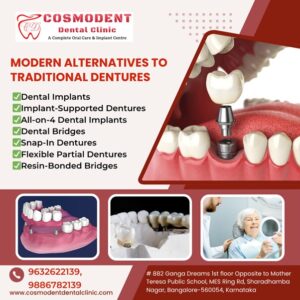
Why Consider Alternatives to Traditional Dentures?
While traditional dentures are affordable and widely available, they come with several drawbacks:
- They may feel bulky or uncomfortable.
- They can slip or move while talking or eating.
- Bone loss in the jaw continues over time.
- They require adhesives or frequent adjustments.
- Long-term wear can affect facial appearance.
Because of these challenges, many patients seek more permanent, natural-looking, and secure options to replace missing teeth.
-
Dental Implants
What Are They?
Dental implants are titanium posts surgically inserted into the jawbone to replace tooth roots. Once healed, a crown, bridge, or denture is placed over the implant to restore function and appearance.
Benefits
- Permanent solution with proper care.
- Look, feel, and function like natural teeth.
- Prevent jawbone deterioration.
- No need for adhesives or removal.
- Improved speech and chewing ability.
Considerations
- Requires sufficient bone density.
- Higher upfront cost compared to dentures.
- Involves surgical procedures and healing time.
Best For: Individuals seeking a long-term, natural-looking solution and who are medically fit for surgery.
-
Implant-Supported Dentures
What Are They?
These are full or partial dentures that are anchored by 2–6 dental implants. They can be removable or fixed, offering a hybrid solution between traditional dentures and full implants.
Benefits
- More stable than removable dentures.
- Less irritation of gums.
- Enhanced chewing efficiency.
- Prevents bone loss in the jaw.
- Doesn’t slip or require adhesive.
Considerations
- Less costly than full-mouth implants.
- Still requires surgery and healing time.
- May need occasional adjustments.
Best For: Those who want better stability and performance than traditional dentures but at a more affordable cost than full implants.
-
All-on-4 Dental Implants
What Is It?
The All-on-4 system is a revolutionary implant technique that replaces all teeth on the upper or lower jaw using just four strategically placed implants.
Benefits
- Full arch restoration with fewer implants.
- Minimally invasive compared to placing individual implants.
- Immediate function in many cases.
- Lower cost than full implant replacement.
Considerations
- Requires healthy bone structure.
- Higher cost than traditional dentures.
- Permanent and non-removable once fixed.
Best For: Patients needing full-mouth restoration and want a fixed, durable solution without undergoing numerous surgeries.
-
Dental Bridges
What Are They?
A dental bridge uses adjacent teeth (or implants) to support an artificial tooth that fills in the gap created by missing teeth. Bridges can be traditional, cantilever, Maryland, or implant-supported.
Benefits
- Doesn’t require removal.
- Quicker solution than implants.
- Aesthetic and functional improvement.
- More affordable than full implant procedures.
Considerations
- May involve alteration of healthy adjacent teeth.
- Does not prevent bone loss at the site of the missing tooth.
- Lifespan is shorter than implants (typically 10–15 years).
Best For: Patients missing one or a few teeth in the same area.
-
Snap-In Dentures
What Are They?
Also called overdentures, snap-in dentures are removable dentures that attach to dental implants via a secure “snap” mechanism.
Benefits
- More secure fit than traditional dentures.
- Easier to remove for cleaning.
- Improved comfort and function.
- No adhesive required.
Considerations
- Still needs to be removed daily.
- More affordable than fixed implant dentures.
- Requires good oral hygiene and implant care.
Best For: Those who want improved stability but prefer a removable option.
-
Flexible Partial Dentures
What Are They?
Made from a flexible plastic material (usually nylon), these partial dentures replace a few missing teeth and blend more naturally with gum tissue.
Benefits
- Lightweight and comfortable.
- More aesthetic and discreet.
- No metal clasps.
- Can be adjusted easily.
Considerations
- Not as durable as implants or bridges.
- Can wear down over time.
- Suitable only for partial tooth loss.
Best For: Patients missing a few teeth and want a less invasive, aesthetic solution.
-
Resin-Bonded Bridges (Maryland Bridges)
What Are They?
This type of bridge uses metal or porcelain wings bonded to the back of adjacent teeth for support, rather than crowns.
Benefits
- Less invasive to surrounding teeth.
- Cost-effective and conservative.
- Quick placement.
Considerations
- Not suitable for areas with heavy biting force (like molars).
- May debond over time.
- Best for front teeth.
Best For: Younger patients or those missing front teeth and seeking a minimally invasive solution.
Factors to Consider When Choosing a Denture Alternative
Every patient’s needs are unique. Consider the following before deciding:
- Number of missing teeth and location.
- Bone density and gum health.
- Budget and long-term goals.
- Medical conditions or restrictions.
- Aesthetic preferences and lifestyle.
A thorough consultation with a dental professional is essential to evaluate which treatment will offer the best long-term comfort, performance, and satisfaction.
Benefits of Choosing Modern Alternatives
Switching from traditional dentures to modern alternatives can:
- Boost your confidence with a more natural appearance.
- Enhance speech and eating without discomfort or slippage.
- Preserve jawbone health and facial structure.
- Reduce or eliminate the need for adhesives or frequent replacements.
- Improve quality of life through long-lasting, functional solutions.
Conclusion: Invest in a Better Smile
Traditional dentures served us well in the past, but modern dentistry offers more advanced, comfortable, and functional ways to restore your smile. From dental implants and implant-supported dentures to flexible partials and All-on-4 systems, today’s tooth replacement options cater to a wide range of needs and budgets.
If you’re struggling with ill-fitting dentures or want a more permanent solution, talk to best dentist about the best alternatives to traditional dentures. The right option can truly transform your appearance, health, and confidence — one smile at a time.